Everything I learned building a six figure startup with SEO & AEO
Video transcript, 27:07
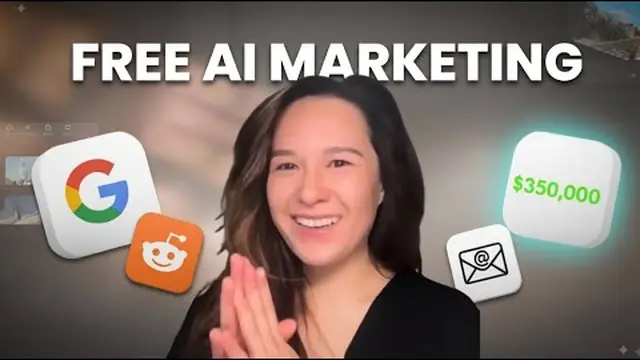
In this conference talk Tanya Van Gastel tells the story of growing The Multiverse AI, an AI headshot platform, to about $350,000 in revenue with a team of three and no marketing budget. She frames the talk around five things that matter: experimenting, data, SEO, affiliate marketing and tooling. It is a fast, funny session with an audience that shouts back, and it ends with a reminder that budget is the one thing on the list that did not matter.
Key points
- Most startup problems are revenue problems, and most revenue problems are marketing problems.
- Small teams with AI can build real companies without the budget, agency and headcount that corporate marketing runs on.
- Try every free channel first: for The Multiverse AI, PR brought logos but no conversions, Reddit brought the first 50 customers, and SEO plus affiliate drove almost all revenue.
- Google Analytics is the tool that tells you what to double down on and what to stop; keep direct traffic as low as you can.
- SEO means finding people who already have the problem you solve, so intent keywords convert far better than informational ones.
- Affiliate marketing costs nothing up front: find the sites that already link to competitors, email them at scale, and pay 20 to 30% on sales.
- Every affiliate who writes about you also links to you, so affiliate marketing feeds your SEO.
Warm-up: money solves problems
Hi everybody. I'm so excited to be here. I think it's been such a wonderful day of like you know getting to understand how to build products. I think everybody's made friends but you know it's never enough. So before we get started I would love if we could all take a minute and talk to the person next to you. I want you to tell them two things. I want you to tell them okay three things.
I'm going to tell them your name, what you're working on, and what you're trying to achieve. Please go ahead. Was enough time. There will be another break, and I think there will be a party on a boat later, so that should be really good. I want you to think a little bit about what you learned. And I want you to tell me, would 200,000 help you achieve what you just said? What that you want to achieve. If yes, raise your hand.
Okay, I see you. Sorry. Partially, right? Okay, here's a big lesson. Money is super helpful for solving problems. It really, really is. And so, a lot of the time when people talk to me about their startup problems, it's not really that you have a startup problem, you have a revenue problem. And so when it comes to building a startup, a lot of the time it's your revenue that is a challenge and a lot of the time that is a marketing problem.
From budget culture to zero budget
And that's kind of where I come in. So I'm going to talk about today is how I built my startup with only three people to 350,000 plus in revenue on a zero dollar budget. That's me. That's me looking a little sweaty, a little sad, a little burned out probably. That's because I was working really long hours in corporate tech in marketing.
And my whole life, my whole career, same with my co-workers, all of the teams, our careers were basically revolving around one thing. It starts with a B. Can you guess what it is? You can shout it out. Branding. Branding budget. Budget. The big B word. Budget. So my whole chat with all my co-workers, my teams, my Slack, my email, my everything was about budget. What is the budget? How much money can we get for this?
Who's going to work with us on this? And my really good friend and co-orker Chris, who's a brilliant marketer, said it best. He said there's only three things I need in this life and it's headcount team members. It is an agency specifically a marketing agency because in-house people don't do things they manage agencies and it is budget and so that was the mantra that we kind of used and that was kind of my background headcount agency budget.
So, how do you go from like everything is about budget to bootstrapping on a zero dollar budget? I'm going to tell you. My name is Tanya. I've lived in I'm Belgian and I've lived in Shanghai. I've lived in Shenzhen. I've lived in Taipei, in Tokyo, in Germany, and now I live in beautiful Barcelona. I used to work at OnePlus which is a smartphone organization and I've also worked at the European Chamber of Commerce.
I've worked predominantly in marketing and I built the Multiverse AI and also AI sheets about spreadsheet marketing automation. But today I want to talk to you about Multiverse.
What The Multiverse AI is
So what is Multiverse? Multiverse is a platform that you can use to upload five photos of yourself and you get 100 professional photos. And we did pretty well. I'm not going to lie. I'm pretty happy about it. We did about $350,000 in revenue over two years at more than 70% profit margins. We did that fully organically.
The only things that me and my co-founders invested in the beginning was about $700 each to set up the entity and everything else was coming from the company itself. We've worked with Amazon, with Walmart, with Deoid. We get really good word of mouth. We were in Forbes, we were in Rolling Stone, that was one that my parents actually knew about. So, that was really cool. And we've worked with like big clients as well.
Small teams are the future
And so, what actually matters here though, what matters is that we're not the only ones.
A lot of companies are doing this right now because we are really just a tiny little drop in this whole wave that was started because of AI and that allowed so many people like me and I think like a lot of you also to think about building a business and growing it and making a living out of it and that's made a huge difference because today small teams armed with AI build awesome companies without traditional budgets or a headcount.
No more agency, no more budget, no more headcount. Small teams are the future. I don't know who was there this morning when Jonas said headcount kills. I really love that because I think this is such a big part of corporate life is alignment, is meetings, is processes. Everybody who's tried to change a font on a landing page knows that it'll take you 500 hours to push things through.
And by the time that you finished, you've made 30 different slides, presentations, 500 emails have been sent out and everybody needs to agree. In a small company, when you're three people, you basically just text somebody. They say they reply with a thumbs up emoji and that text has changed and that's the end of the process. So in that time you've saved a huge amount of money actually.
And I think for some companies they tend to think oh but we're such a small team like what can I actually do and you can do so much more. That's the correct answer. So I think small headcount can really be a superpower. I think the timings here can be a little bit off. Like we all know lovable started many years ago. They were GPT engineer then. But what's key here is how small the teams are.
These are teams of 15 people, 20 people. This used to be impossible and yet here we are. I want you to think about that. Everybody starts here. You know, we all start small. We start be by building something and then hopefully we get to the stage where we sell it.
And at some point hopefully I hope that sincerely for all of us that we can get here to the mid journeys the lovables the charizards of the startup ecosystem but they all started small you know and that's really something to remember because I think when you go on Twitter and you see so many people saying oh I did 5 million MR in three days you're like what am I doing wrong, but you're not doing anything wrong.
It just takes so much time and you have to start there and then you have to slowly grow. I'm here. This is my AI head shot by the way and I'm here and we've gone past a little bit, you know, we've gone past building. We're now at selling at marketing and then hopefully we can go to scaling.
Five things that matter
I'm going to tell you everything today that I learned going from zero to $350,000 in revenue on a one on one person marketing team. It's not going to be everything. I'm going to tell you five things. Everything is if you have three weeks time and you're not drinking or eating anything and we're spending it all together. I think we should play a game. By the way, I think that every time I point at you, you should say matters.
So, let's let's try it out. See if you're a good audience. Experimenting data SEO matters. Affiliate tooling. That's really great. I really enjoy that. Feels very powerful, too. I'm not going to lie. I'm going to give you a mini master class on every single one of these and then we can take questions at the end. Experimenting. Awesome.
Experimenting with every free channel
So when I started I knew one thing about organic marketing and organic marketing is basically just marketing without a budget. It means no advertising no paid no ads essentially. It's everything else. I knew nothing. I knew absolutely nothing about organic marketing. I only knew budget headcount in agency, you know. So I say that to you not because I know nothing now, but because that's where I started two years ago and that's how much it can change in two years.
When I started, I had to gather a lot of information. A really great way to gather information is by experimenting because experimenting so good, really beautiful. So, I literally tried all the channels that I could think of, all the channels that I could think of that were free because I have no money. I tried Reddit. I tried LinkedIn. I tried PR. I tried paid marketing. I put in $100. I tried short video.
I tried email marketing, I tried affiliate, and I tried SEO. And so it was pretty good for PR. I got us in Forbes, which was really great, but you know what? It drove almost no conversions. So PR was really great for kind of, you know, getting that coverage, getting that logo on your landing page and increasing conversion, but it did almost nothing for traffic. Something to keep in mind. I would post a lot of stuff on Reddit.
I think I ran through like three different like user accounts and I got all of them banned at some point because they suspend so quickly. And then also I started with short video. This is what I learned. Reddit, awesome channel. I did get three accounts banned, but I also got us our first 50 customers.
And that was so much confidence, you know, because that really taught me like, oh, I can like make a living out of this, you know, like there's people who actually want to use the thing that we built and it was very beautiful experience. LinkedIn, it works pretty well for B2B. You get a lot of trust through it. People kind of like start to understand who you are.
They kind of see that you have dedicated your whole life and being into this and it's a really good touch point but it takes like 30 times 30 touch points it takes like someone seeing your face your name your content 30 times before they convert this is a madeup number by the way like I don't have exact metrics on that but from asking like some of our B2B users that's generally how long it takes that's a really long life cycle. Testimonials.
Testimonials for us were huge because people would see a really cool AI head shot like that one. And they would think, "Wow, that's a great photo. I'm going to go and I'm going to buy that." But it depends on your product. Paid marketing didn't work for us. There was no ROI on it. Short video took a lot of time. Email marketing also didn't work really for us.
There were two things that were key in driving almost all of our revenue and it was affiliate marketing and SEO and I'm going to tell you what those are. I'm also going to tell you that experimenting really taught me and everybody's marketing will be different. Whatever you think is the right thing is the right thing as long as it works for your needs. Everybody will have a different style. I have my preferred channels. Somebody else will have their preferred channels.
I don't like making short videos. I didn't really enjoy it. So, it wasn't sustainable for me, right? It's really something that is very personalized. It's like thinking about your favorite no code tool, your favorite email client, your this, your that. Your marketing stack will be personalized to your needs, and that's okay. If somebody tells you that your marketing stack is wrong, you should just walk away. Like, you can't be dealing with that drama. It's okay. Data matters. Data matters. Okay, cool.
Very good.
Data: Google Analytics and direct traffic
Let me introduce you to my nemesis, now turned best friend. I cannot tell you how much I hated this platform when I just started it. It's Google Analytics. Who has spent a lot of time in Google Analytics? Who loves Google Analytics? It's literally everybody here. Every single person put their put their hand down. And I get it. I totally get it. Google Analytics is just these very ugly little like brackets of text everywhere and nobody understands how to navigate it.
Nobody really gets what it does. Everything is just like hidden. It's very annoying. I don't understand why Google does this because there is a way to fix that. But first, Google Analytics is really important because if you don't know where your users are converting from, you don't know what to double down on and you don't know what to stop doing. You don't know if your time is being wasted or being spent properly.
And that's why you need Google Analytics and that's why data. Yes. Awesome. So a last note about 40% of our traffic came from direct traffic. Direct traffic is basically Google's way of saying I have no effing clue. I have no effing clue what you are talking about. Direct traffic basically just means that Google is unable to attribute where your traffic is coming from. This is super normal.
Anytime that you know you've seen a short video and you've maybe just like clicked on the link that didn't allow for cookie tracking, that's direct traffic. It's very normal. But if you want to be able to double down, please keep in mind that you want to keep your direct traffic as low as possible. That's a really important thing to be able to double down on.
So, for our purposes, I'm going to remove the direct traffic and I'm still going to show you what our main channels were. These are our main channels that we're going to talk about. I'm going to be super transparent here because I'm a huge fan of hashtagbuilding public and I think it's just so valuable for people to understand what actually works and what doesn't. For people to get valuable use cases. Oh my god, five minutes. No way. Okay, let's go.
Let's do this. Here are numbers. I want you to remember two things. SEO super important. Affiliate super important. Reddit also important. All of these channels are important. But what really matters is that conversion rate for some of them are way higher. 14% for affiliate. That's pretty crazy. This is just pure landing page conversion. So you want to track three things. It's traffic source, your conversion rate and also your sales source.
Your sales source is different because it's amount of people who buy. Traffic is just the amount of people who like actually come to your website. SEO. Let's go. Oh, that was so good. I didn't even do that. We have five minutes. I don't know what we're going to do.
SEO in one minute
Everything you need to know about SEO in I don't know one minute. What is SEO? SEO is the process of improving your website so it ranks higher on Google when people search for things related to your business. I never got that. Like it didn't make any sense to me. Like what does that mean? Let's talk about a better definition. SEO is finding people who have problems. Problems that you can solve, right?
So if you think about whenever you need anything, you will probably Google it. Let's say I want AI head shot. I Google how to get AI head shot. I find the Multiverse AI. Oh my god, top ranking keyword is very beautiful. I will go on that page and because I'm already looking for best AI head shot, I will be ready to buy. So conversion rate is actually really really high for good intent keywords.
Over one and a half, 1.5 million people have seen the Multiverse AI. That's Taylor Swift's full stadium in London 20 times. So we are a team of three people and yet we have 20 times the reach of Taylor Swift's London audience. It's only possible with SEO. How do you get started? I think we have to skip a lot of stuff, guys. How can we get started? I want to talk about Tipporo. It's Kieran's startup.
He's one of the organizers of Create with. They are a AI writing tool for LinkedIn. If I would be Kieran, I would say he should look at keywords related to what his tool actually does and then look for keywords that rank lowest in difficulty and highest in volume. And actually, the keyword is LinkedIn post generator AI is a really great keyword. If you try to rank for it, you will get 60 hits every single month for free.
But these are not just regular hits, you know, these are actually warm leads because these are people who already search for your specific solution and you are giving it to them. So, it's very likely that they will purchase. Backlinks also really matter. The person that you talk to besides you, ask them if they have a good blog or website or whatever, sneak in a little backlink exchange.
It may help your website rank a lot in terms of domain authority which is the artificial rating that Google gives your website and it determines how important it is. HFS is a really great tool for that. Linkdr is also a really great tool for that for backlink exchange. How do you get more link DR actually I have a part later where I talk about all the tools.
So if we are able to get to that and we have no time at all, we're going to see if we can get to that. If you can get if you want to get more content at scale, there are also tools for that. Cloud is really good. GPT is really good. If you have the right prompts, you can do a lot in terms of AI generating content, especially for things like a dictionary or a glossery. I have also built a tool.
It's called AI Sheets and I use it to generate a 100 pages at a time in a Google spreadsheet and then I import it in web flow, in framer, in WordPress, all of those things immediately. And so that is super helpful to rank because you can see which keywords do well and then manually go in and improve those pages. Keywords, backlink, content, get those warm leads to your website. Affiliate. Affiliate so good. So good.
Affiliate marketing at scale
Everything you need to know about affiliate in 30 seconds, I guess. It's affiliate is basically when other people promote your product and then they get money for it when they sell. It's not paid up front, which is very beautiful because that means it comes to you at zero cost. You pay afterwards. You generally do like 20 or 30%. In theory, for an affiliate program, you just need an affiliate program and an affiliates, right? Like, it's easy. No, it's totally not easy.
It's actually very difficult because you need to find the affiliates, you need to get their contact info, you need to message them, you need to manage them. It's quite complicated, but there are ways that you can do that. There are free ways, then there are also paid ways. And so, the way that I used to do it when I started is I would just search for keywords on Google.
I would copy paste the top 30 results headline in a Google spreadsheet and then I would search for their email and then I would just send out a mail merch and I'd be like, "Hey, have you heard of the Multiverse AI?" And some of them would tell me, "This is a great thing. I would love to promote it." then they sign up for the affiliate program and they promote your product. Here's what I do now. Edit GPT.
They used AI sheets to execute this. And so basically what you do is you find a competitor on Google. You go on HFS, you paste it in site explorer, you look at all their back links, you look at all the sites that have ever mentioned your competitor. So you know that they already care about this about this product, about this category, about this niche. It's good to have competitors. And then you dump it in a Google sheet.
You export all the backlinks to a Google sheet. You can use AI sheets to then scrape the email and scrape the email and then you send out that mail merch but you send it at scale. You send it to a thousand people and that way because generally an email list like that you'll have about you know a 5% 5% like return rate. 5% of people will tell you that's great.
I would love to I'd love to be an affiliate of yours, but that's all for free. You see, and these people are super invested in promoting your product because you are paying them for it. The higher your affiliate, actually, the higher your affiliate commission, it doesn't matter that much. Generally, if you're between like 20 or 30%, you're good. If you go higher, people may actually think you're a scam. If you go 20 or 30, that's a general like reliable number.
I would say much more important to include is your conversion rate. If your conversion rate on your website is high, the affiliate knows how much traffic he can push to your website. But if that conversion rate is high, he knows that he will earn really well on your product. And that's the thing that you want to push. So, Edit GPT sent out all of this outreach. They got a bunch of really cool responses.
They're like, I can include you in my email newsletter with 130,000 people for free. This guy Andrew was like, "That's cool." The coolest reply ever. Literally so short. But he just wanted to know what the difference was with a competitor. But then he posted about it and this man has 60,000 followers and he posted about edit GPT for free because he stood to earn about it as well.
And so it's a really great way to push that because Andrew posted about him edited GPT in about three days added another 2,500 MR to their business. They were already doing 35 though. So, this did cost $83, but that cost $83 to scale per month. And so, if you consider that somebody like Andrew with $60,000 followers will cost you about $2,500 or more just to have a partnership with them, that's really good ROI. So, good tips for affiliate marketing.
You want to be excited about your product, understand your affiliate conversion rate, and always give a free trial. If somebody asks for money, that's okay. Go into HS, figure out if this is a good SEO person because you want your affiliate content to rank well on Google. And some affiliate marketers are magical. They're amazing, amazing SEO people. And you want to focus on that. Affiliate recap. Have a good affiliate program. Scale with smart tools.
Don't be brutal about ROI because SEO takes time. I always recommend to start with affiliate before you start with SEO because every person who makes content about you also links to you. So that's a free backlink for free and that matters a lot. Makes a huge difference for your SEO. Affiliates here are really the double win like I just said. You'll also have feedback from them a lot of the time because they have skin in the game.
They're your most dedicated user and promoter.
Tooling and closing
Last tooling. Awesome. Take a photo of this. We're going to move on to the next point. But basically, all of these tools are tools that I use and they are incredibly useful for helping to drive your marketing revenue. We have to go to the next. So, for better or for worse, marketing never ends. There are always more channels to try. There are always more things that you can do. But really knowledge is power and revenue because marketing really beautiful.
I want to say one more thing which is that you know we talked about experimenting data SEO affiliate tooling. Nice. There's one thing here that is missing. It's budget because honestly budget doesn't matter as much. Comes with a disclaimer though. If somebody gives you a million dollars, just take it. Like don't say no to that, you know. That was the playbook of what worked for us and helped me get here. I hope it helps you. Please feel free to connect.
I also run a marketing automation agency, a marketing agency, and I'm building AI sheets in public. I talk about marketing on LinkedIn as well as on YouTube. And thank you guys so much.
Transcript lightly edited for readability: filler removed, punctuation and names fixed, her wording kept. All video transcripts.